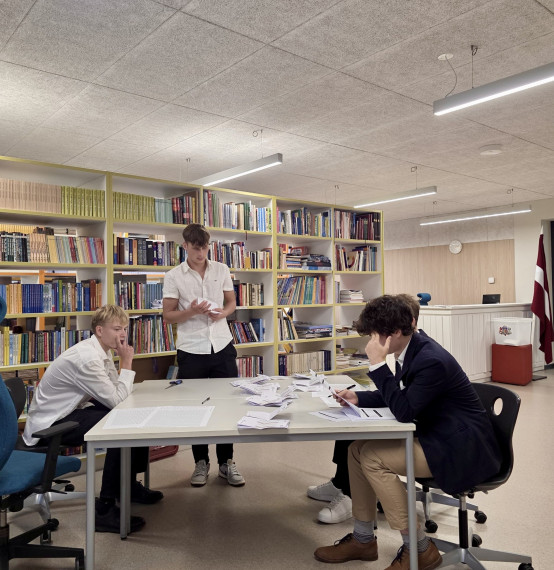

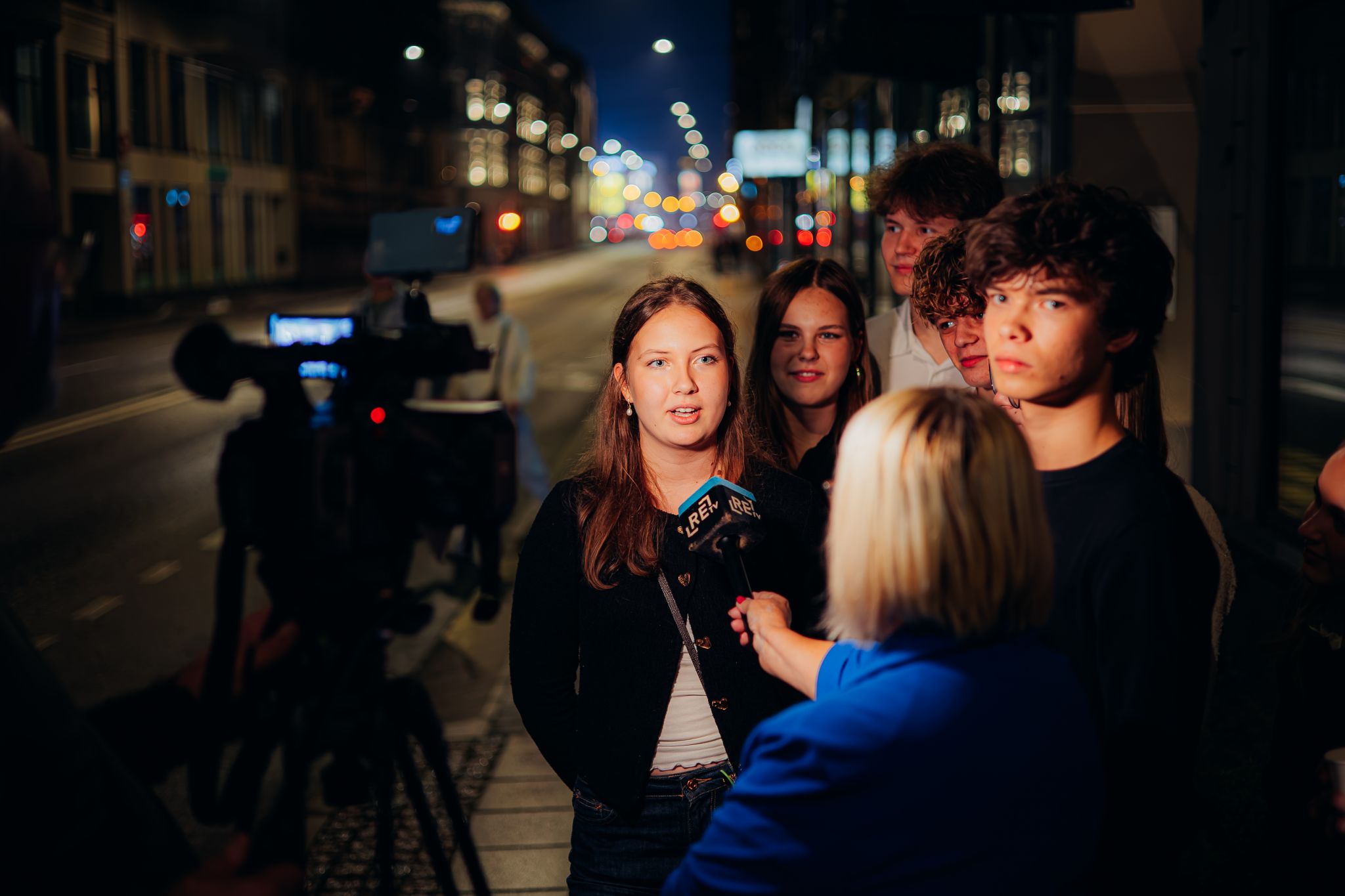
From 14 to 28 September, Signal Elections 2026 took place in educational institutions across Latvia, involving students in grades 10-12 from secondary schools and state gymnasiums, as well as students in years 1-4 of vocational secondary education. The initiative culminated on the evening of 3 October, when the Signal Elections results were announced alongside the conclusion of the official Saeima elections. Signal Elections results show that the political party “The Progressives” received the highest level of support among young people with 5156 votes (20.66%) of all participants.
Signal Elections is an initiative adopted from the Nordic countries. It was first introduced in Latvia in 2025 as a pilot project ahead of the municipal elections. At that time, voting took place online, while this year it was organised in person, using the same type of ballot papers and following procedures similar to those used in official elections. One of the initiative’s main aims is to encourage young people to take part in democratic processes in the future by showing that voting is simple and that everyone should make use of their opportunity to participate.
This year, 215 out of 236 educational institutions in Latvia took part in Signal Elections. Of the 44 463 eligible young voters, 25 522 cast their ballots, representing a turnout of 57.40%. According to the young people involved in organising Signal Elections, both the turnout and the results have challenged at least five common stereotypes.
1. Young people care, they are not passive. Nearly 60% of eligible young people took part in Signal Elections.
2. Young people in Latvia are not radically minded. The results suggest that most support democratic and European values.
3. Young people care about more than just their own interests. During the think tanks in which young people developed their priorities for Latvia’s future, mutual solidarity, an inclusive society and fair politics were among the key themes.
4. Digital voting is not necessarily more popular than paper voting, at least in Signal Elections. Turnout in the digital Signal Elections in 2025 was lower than in this year’s paper-based vote.
5. Young people are interested in politics. They are willing to express their ideas and prefer practical involvement in political processes rather than purely theoretical learning.
On 3 October, the Signal Elections results were announced alongside the conclusion of the official Saeima elections. Seven of the 14 party lists passed the 5% threshold. “The Progressives” (P) won the largest number of seats, with 26. They were followed by the “United List” (AS) with 23 seats, “Latvia First” (LPV) with 12, “Sovereign Power/Alliance of Young Latvians” (SV/AJ) with 11, the “Union of Greens and Farmers” (ZZS) with 10, while “New Unity” (JV) and the “National Alliance” (NA) each received 9 seats. Among the electoral districts, Riga recorded the highest participation, with 8999 young people casting their votes, followed by Vidzeme with 5872 and Latgale with 4231 participants. Thank you to all the young people who took part, as well as to everyone who supported and encouraged the organisation of Signal Elections in their educational institutions!
Signal Elections is an educational initiative. Its results are not connected to and do not in any way affect the official results of the elections to the Saeima of the Republic of Latvia.
Read more about the Signal Elections and the results: here
Signal Elections is implemented by the association “European Movement – Latvia”. The project is carried out with financial support from the Nordic Council of Ministers’ Office in Latvia. The Ministry of Education and Science is the project’s information partner.